Buona
Reviews in other languages: how to reply in your customer's language (with examples)
More than 1 in 5 people in the US speak a language other than English at home, and tourists review you in their own language too. Why replying in their language matters, Booking.com's rule, the mistakes to avoid, and examples in six languages.
Key takeaways
- 22% of US residents age 5 and older speak a language other than English at home; about 6 in 10 of them speak Spanish (US Census Bureau).
- Google Maps automatically translates reviews into the reader's language: other customers read your replies in their language too.
- Replying in the customer's language is a small gesture people notice, and that other customers from the same community read.
- On Booking.com, replies must be in the review's language or in English: others aren't published.
- Always read AI-written replies before posting: ask for an English translation of what you are about to publish.
A customer leaves four stars for your taquería, in Spanish, praising the al pastor but mentioning a long wait on Saturday night. You reply "Thanks for the review!". She may not feel heard, and the next Spanish-speaking customers reading your reviews see a generic answer to a concrete problem. Two more minutes, and the same reply becomes a small welcome sign for a whole community.
Why it matters: the numbers
of US residents age 5+ speak a language other than English at home1
of them speak Spanish1
of consumers expect businesses to reply to reviews2
More than 1 in 5 people in the US speak another language at home, according to Census Bureau data from 2017–20211. Add international visitors in tourist areas, and many local businesses get reviews in Spanish, Chinese, Vietnamese, French or Portuguese every month.
Google translates already: what about your replies?
Since 2017, Google Maps and Search have automatically translated reviews into the language set on the reader's phone, showing the original text too3. So why reply in the customer's language if Google translates? Three reasons:
- The customer who wrote gets your reply, and a reply in their language says "we really listened".
- Not every platform translates, and not the same way. Booking.com has strict rules on reply languages (see below).
- An automatic translation of a generic reply is still generic. A reply written for that person, with the right detail, works in any language.
Platform rules
- Booking.com: you can reply in the review's language or in English. Replies in other languages aren't published, and every reply is checked before it goes live4.
- Google: no language requirement. Replies are checked before they're published and the reviewer is notified when you reply5.
- Yelp and Tripadvisor: reply from your business account. Replying in the customer's language is still the most respectful choice. (And remember: never ask for Yelp reviews.)
The 4-step method, in any language
- Thank them, by name if shown.
- Pick up a detail from the review: the dish, the room, the stylist.
- Explain or fix, only if needed, in one or two simple sentences.
- Sign with your name and role.
The full method is in our reply guide. Three extra tips when the language isn't yours:
- Short, simple sentences. Fewer idioms, fewer mistakes.
- Formal or informal? In Spanish, "usted" is the safe choice with a customer you don't know; in German, "Sie"; in French, "vous".
- Have your first replies checked by someone who speaks the language: a team member, a friend, a regular. Then use them as templates.
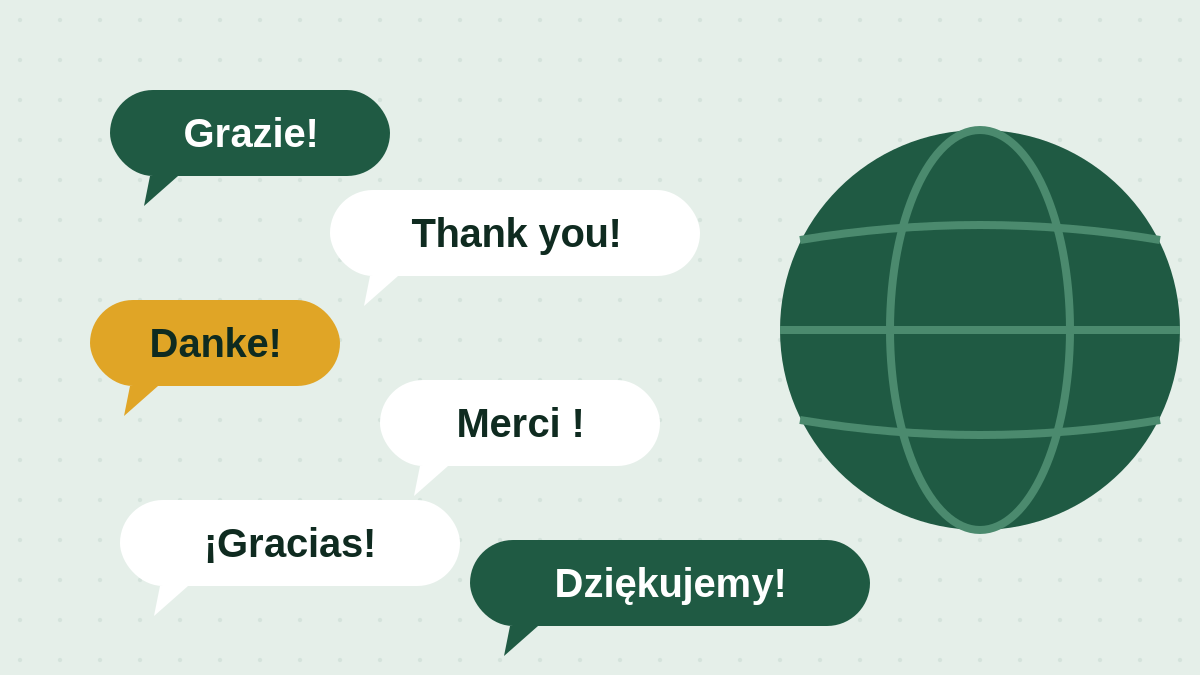
Examples in six languages
These examples are invented. Adapt them and keep one real detail from the review. The English meaning is under each one.
Spanish: restaurant, four stars with a complaint
¡Muchas gracias, Sra. Ramírez! Nos alegra que le haya gustado el pastor. Tiene razón sobre la espera del sábado: ahora tenemos una persona más en el turno de la noche. ¡La esperamos pronto! Miguel, dueño
Thank you so much, Mrs. Ramírez! We're glad you enjoyed the al pastor. You're right about Saturday's wait: we now have one more person on the evening shift. Hope to see you soon! Miguel, owner
Chinese (Simplified): nail salon, positive
王女士,非常感谢您的好评!很高兴您喜欢这次的法式美甲。期待您再次光临!Lisa,店主
Ms. Wang, thank you very much for your kind review! We're glad you liked your French manicure. We look forward to seeing you again! Lisa, owner
Vietnamese: bakery, positive
Cảm ơn anh Minh rất nhiều vì đánh giá tuyệt vời! Chúng tôi rất vui vì anh thích bánh mì của tiệm. Hẹn gặp lại anh! Anna
Thank you so much, Minh, for the great review! We're very happy you liked our bánh mì. See you again! Anna
French: hotel, negative
Bonjour Monsieur Martin, merci pour votre retour. Nous sommes désolés pour le bruit dans votre chambre samedi soir. Nous avons changé les fenêtres de ce côté de l'hôtel. Si vous souhaitez en parler, écrivez-nous à info@[hotel].com. Cordialement, Julia, directrice
Hello Mr. Martin, thank you for your feedback. We're sorry about the noise in your room on Saturday night. We've replaced the windows on that side of the hotel. If you'd like to talk about it, write to us at info@[hotel].com. Best regards, Julia, manager
Portuguese (Brazil): auto repair, positive
Muito obrigado, Carlos! Ficamos felizes que o conserto dos freios ficou pronto no mesmo dia. Conte sempre com a gente! Mike
Thank you very much, Carlos! We're glad your brake repair was ready the same day. You can always count on us! Mike
German: tour, positive
Vielen Dank für Ihre Bewertung, Herr Weber! Es freut uns sehr, dass Ihnen die Bootstour bei Sonnenuntergang gefallen hat. Wir hoffen, Sie bald wieder begrüßen zu dürfen. Sarah
Thank you for your review, Mr. Weber! We're very glad you enjoyed the sunset boat tour. We hope to welcome you again soon. Sarah
What about AI?
AI assistants now write correctly in many languages and can save you a lot of time. Three rules:
- Always read it first, especially replies to negative reviews, and ask for the English translation.
- No invented details. AI may add "we hope to see you and your family again" to someone who came alone. Remove anything the customer didn't write.
- AI writes replies, never reviews. Only customers write reviews.
That's how BuonaFama's AI agent works: it replies in the review's language, whatever it is, and for every review in another language it gives you a translation of the review and of the reply in your language, so you always know what you're publishing. See it in the demo.
The most common mistakes
- Replying in English to everyone, even when the customer clearly prefers another language.
- Pasting into a translator and posting without checking the meaning: "we're sorry" can turn into an admission you didn't intend.
- The same canned sentence for everyone, whatever the language.
- Too casual a tone where a formal register is expected.
- Ignoring reviews in less common languages. A reply in Vietnamese or Polish gets noticed, by the reviewer and by everyone reading after.
Starting tomorrow
- Look at your last 20 reviews on Google, Yelp and your industry platforms: how many languages are there?
- Reply to those still waiting, starting with the most recent ones in other languages.
- Prepare 3 template sentences in the two or three languages your customers use most, checked by a native speaker.
- Add a Spanish line to your review QR sign if many customers speak Spanish: "¿Qué tal le fue? Cuéntenos en 30 segundos."
Sources
- US Census Bureau, Language use tables from the 2017–2021 ACS (June 3, 2025)
- BrightLocal, Local Consumer Review Survey 2026
- Google, Local reviews in your language, wherever you are (April 24, 2017)
- Booking.com Partner Help, Responding to guest reviews
- Google, Manage customer reviews
Sources checked on November 24, 2026. Platforms change often: if you spot something out of date, let us know.