Online reviews in 2026: 15 numbers every local business owner should know
How many reviews you need, how much stars matter, how fast to reply, and how much AI already shapes the choice. The latest data, with sources, and what to do with it tomorrow morning.
Key takeaways
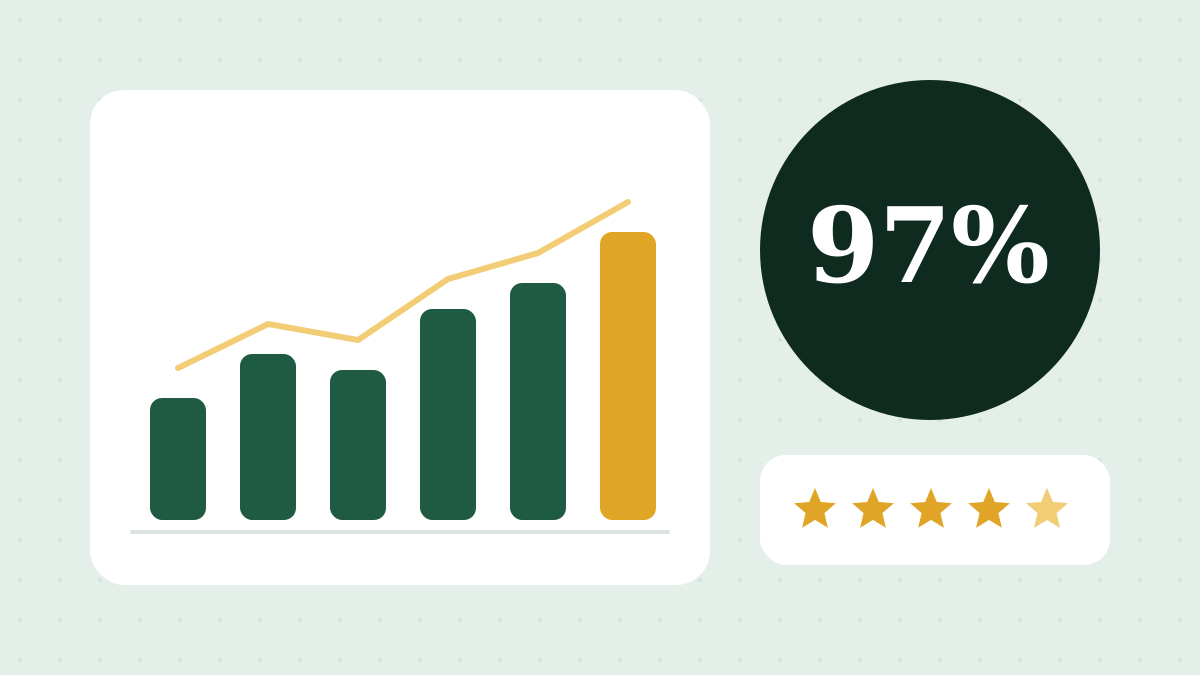
- 97% of US consumers read reviews for local businesses, and 41% always do.
- 68% will only use a business rated 4 stars or higher; 47% skip businesses with fewer than 20 reviews.
- 74% only care about reviews from the last three months: recency matters as much as the rating.
- 80% are more likely to use a business that replies to all its reviews; 50% are put off by copy-paste replies.
- ChatGPT and other AI tools are now the third most used source for local recommendations (45%, up from 6%).
Reviews are now the first conversation between a local business and a customer who doesn't know it yet. But how much do they really matter, and what exactly do people look at? We pulled together the most recent, reliable numbers and turned each one into something you can act on.
1. Who reads reviews
read reviews when looking for a local business1
always read them, up from 29% a year earlier1
review sites used on average1
What to do: don't think only about Google. Customers cross-check Google, Facebook, Yelp, Apple Maps and, more and more, AI assistants. A polished Google profile next to a neglected listing elsewhere sends mixed signals.
2. How much stars matter
only use businesses rated 4 stars or higher (was 55%)1
want at least 4.5 stars (was 17%)1
only choose 5-star businesses1
The bar went up in a single year. Four stars is now the minimum for two out of three customers to even consider you.
What to do: if you're under 4, the priority isn't marketing. Read what unhappy customers say, fix what can be fixed, and get more reviews from your happy customers, who are usually the majority but write less.
3. How many reviews you need
A 5.0 with four reviews convinces almost nobody. A 4.6 with three hundred tells the story of a business that delivers every day.
What to do: 20 reviews is your first milestone. If you're not there, make leaving a review easy: a visible QR code, a short message after the visit. See how to ask the right way.
4. Recent reviews count more
only care about reviews from the last 3 months1
look at the last 2 weeks (was 20%)1
are only swayed by the last week1
A great rating built years ago isn't enough: customers want to know what you're like today.
What to do: a few reviews every week beats a hundred in one month and then silence. Consistency beats campaigns.
5. Replying makes a difference
expect businesses to reply to reviews1
are more likely to use a business that replies to all its reviews1
are put off by generic or templated replies1
On timing, 81% expect a reply within a week and 19% the same day1.
What to do: reply to every review, within a few days, and make it personal. "Thanks for the review!" pasted fifty times is almost worse than silence. Our reply guide has a four-step method and examples.
6. Asking works
were asked for a review in the past year1
say they always leave one when asked (was 16%)1
are open to writing a review1
What to do: most happy customers don't review simply because nobody asked, or because it's a hassle. Asking everyone, the right way and without rewards, is the most underrated lever you have. (One exception: Yelp asks businesses not to request reviews. More in this guide.)
7. AI is entering the decision
This is the biggest change of the past year. In the 2026 survey, ChatGPT and other generative AI tools became the third most used source for reading reviews and recommendations about local businesses: 45% of respondents use them, up from 6% the year before. Over the same period Google dropped from 83% to 71%, while staying far ahead in first place. Apple Maps doubled, from 14% to 27%1.
40% say they trust AI recommendations, and 82% read AI-generated review summaries1. In other words, many customers won't read your individual reviews: they'll read a summary of them.
What to do: AI tools don't invent things out of thin air. They read what they find online: listings, reviews, websites. We explain how in our guide to AI search.
What to do this week
- Look at your Google profile like a customer would. Rating, number of reviews, date of the latest one.
- Reply to the reviews still waiting, starting with the negative and most recent ones.
- Put a review QR code where customers wait or pay.
- Ask everyone, the same way, with no rewards.
- Ask ChatGPT and Gemini who they'd recommend near you for what you do, and see if you're there.
Sources
- BrightLocal, Local Consumer Review Survey 2026
- PinMeTo, Review survey 2026: 85% act on reviews, recency decides (June 25, 2026)
Sources checked on October 23, 2026. Platforms change often: if you spot something out of date, let us know.